Building an online store today requires more than a simple website. UK shoppers expect fast speed, secure payments, and a smooth buying experience. This guide walks you through how to build an ecommerce website from scratch, covering every step clearly and simply. It also reflects the standards followed by Edge Marketing Experts, a trusted name in website ecommerce development across major UK cities.
Table of Contents
Toggle1. Understanding how to build an ecommerce website from scratch
Before you start designing anything, understand how online selling works. An ecommerce site must load quickly, handle transactions safely, and present products clearly. You also need clear navigation that supports user behaviour across the United Kingdom cities, where buying patterns differ by region. It’s important to define the core structure early, including product listings, checkout flow, and user interface, to ensure the site meets core ecommerce website requirements.
2. Choosing the Right Business Model
Decide whether you want B2C, D2C, marketplace, or b2b ecommerce website development. B2B sites require advanced features such as bulk pricing and account-based access, while consumer stores demand simple checkout flows. Selecting the right model helps you choose the features, plugins, and payment options that match your business goals.
3. Selecting Your Niche and Target Audience
Choose a niche that has steady search demand in UK cities. Identify the audience type, buying frequency, and average order value. This step ensures that every design choice supports real user expectations. A well-defined niche also helps you focus your marketing efforts and create content that aligns with the customer’s interests.
4. Conducting Competitor and Market Research
Analyze the top competitors selling in London, Manchester, Birmingham, and Glasgow. Look at their product range, site layout, customer journey, and marketing strategy. Competitor audits help you set accurate ecommerce website requirements. Understanding what others are doing well helps you avoid mistakes and build a unique selling proposition.
5. Picking the Best Ecommerce Platform
Choose a platform that fits your long-term goals. Many UK businesses prefer WordPress and WooCommerce because they allow you to create an ecommerce website WordPress sites with full flexibility. Others prefer Shopify for quick deployment. Select a platform that supports growth, SEO, and custom features. For scalability and long-term savings, WordPress often becomes the more affordable ecommerce website development option.
6. Registering a Domain Name
Choose a domain that sounds professional, matches your brand, and performs well in local searches. A UK-based store should ideally use .co.uk or .uk extensions for trust and higher regional visibility. Short, easy-to-pronounce domains help customers remember your brand.
7. Choosing a Reliable Web Hosting Provider
Pick hosting that delivers consistent uptime, fast loading, and strong security. Cloud-based hosting works best because it can manage traffic from different UK cities without slowing down. Good hosting lays the foundation for website ecommerce development and also affects your search engine rankings and customer experience.
8. Designing Your Ecommerce Store Layout
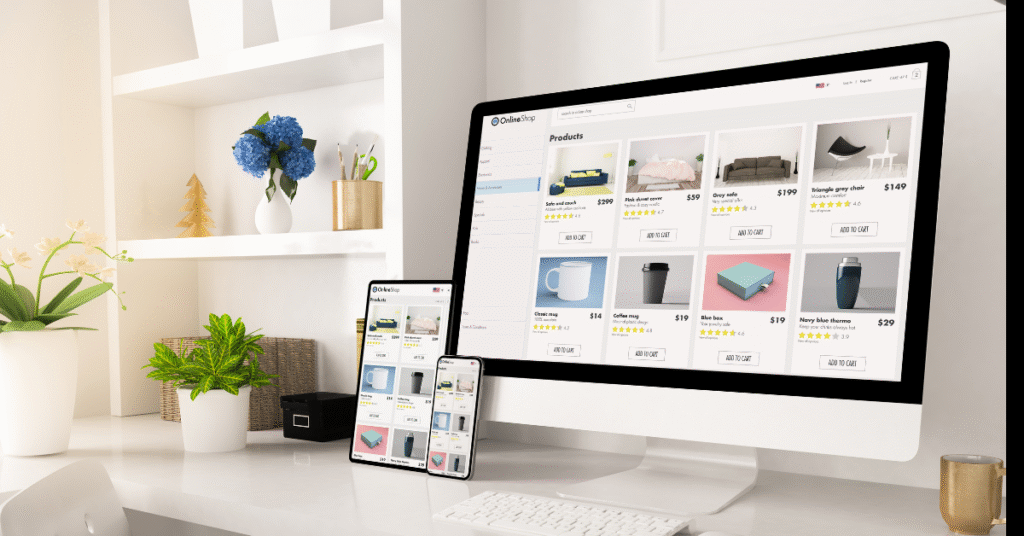
Modern shoppers prefer clean layouts, simple menus, and mobile-first interfaces. Prioritise ecommerce website design UK standards, which rely on clarity, accessibility, and straightforward product paths. Keep your design neat to support both beginners and repeat customers. A clear layout also helps search engines understand your site structure.
9. Creating Essential Website Pages
Build clear categories, product pages, about us, contact, returns information, and FAQs. These pages build trust and answer buyer questions quickly. Shoppers in the UK often look for clear return policies and shipping details before making a purchase.
10. Adding Products With SEO-Friendly Descriptions
Each product should include benefits, features, sizes, and clear pricing. Use keywords naturally and keep the tone simple. This improves visibility in local searches and supports your long-term content strategy. Adding high-quality images and videos can also increase conversions.
11. Setting Up Payment Gateways
UK customers expect choices such as credit cards, PayPal, Klarna, Stripe, and Apple Pay. A secure checkout increases trust and reduces cart abandonment. Offering multiple payment options improves accessibility and customer satisfaction.
12. Configuring Shipping Methods & Delivery Zones
Set shipping rules for England, Scotland, Wales, and Northern Ireland. Provide fast delivery options for major cities and clear timelines for remote areas. Transparent shipping costs help customers make decisions faster.
13. Implementing Inventory Management
Use automated stock tracking to avoid overselling. Some platforms integrate real-time inventory tools that sync products across multiple sales channels. Effective inventory management reduces order cancellations and improves store efficiency.
14. Ensuring Mobile Responsiveness
Most shoppers buy directly from their phones. A responsive layout ensures that images, menus, and buttons adjust smoothly on all screen sizes. Mobile optimization also supports better rankings and higher conversion rates.
15. Optimizing Speed & Performance
Speed affects user experience and Google rankings. Apply ecommerce website speed optimization techniques such as image compression, caching, reduction of unnecessary scripts, and lightweight themes. Faster websites convert better. Speed also influences how long users stay on your site.
16. Integrating Essential Ecommerce Tools & Plugins
Add tools for SEO, analytics, reviews, automation, and product filtering. Plugins help you personalize the store without heavy coding. Tools like review widgets and search filters enhance customer experience and build trust.
17. Setting Up Security (SSL, Backups, Firewall) dd Your Heading Text Here
Prioritise security for ecommerce website operations. Use SSL certificates, two-factor authentication, routine backups, and firewall protection. A secure store protects data and builds credibility. Regular security updates help protect against cyber threats.
18. Adding Customer Support Systems
Provide live chat, a hotline, WhatsApp links, and contact forms. UK buyers expect quick replies, especially during peak shopping hours. Good customer support reduces refunds and strengthens long-term loyalty.
19. Testing Your Ecommerce Website
Test everything from product search to checkout. Fix broken links, speed issues, button errors, and layout glitches. A smooth flow ensures a reliable customer experience. Test your site on multiple devices to ensure consistency.
20. Launching Your Store
Once the site passes testing, launch it with a structured marketing plan. Add Google Analytics, Search Console, and tracking tools to measure early performance. Promote your launch through social media, ads, and email campaigns.
21. Creating a Marketing Strategy (SEO, PPC, Social Media)
Use local SEO to reach city-level audiences. For long-term traffic, apply link building for ecommerce websites. This improves visibility and helps pages rank for competitive keywords. Follow a clean backlink approach to strengthen domain authority safely. Paid ads can support immediate sales while backlinks build long-term trust.
22. Implementing Email Marketing & Automation
Use email sequences to welcome new customers, recover abandoned carts, and promote new collections. Automation increases engagement without manual work. Email marketing remains one of the top revenue generators for UK ecommerce stores.
23. Tracking Analytics & Performance Metrics
Monitor traffic, conversions, bounce rate, and session duration. Data helps you refine your strategy and understand which products perform better. Analytics reveal which pages need improvement and which marketing channels deliver the best ROI.
24. Improving Conversion Rates Through CRO
Upgrade visuals, enhance product descriptions, reduce checkout steps, and add trust badges. CRO ensures that every visitor has a higher chance of buying.
25. Scaling Your Ecommerce Business
As your store grows, consider advanced integrations, multi-city fulfilment, and improved product lines. A strong ecommerce website development company can help expand your store with scalable solutions. You may also enhance your marketplace presence, strengthen brand identity, and launch targeted campaigns in high-value UK regions. Expanding to B2B or wholesale channels is another way to scale revenue.